Marine painter Willy Stöwer – Warships to collect
Accompanying the exhibition "Colonial Traces of Reinickendorf's Industrial History" in the GalerieETAGE, selected objects were also examined for their colonial traces and contexts in the rooms of the permanent exhibition in the Reinickendorf Museum.
With the participation of a focus group of students from the Thomas-Mann-Gymnasium (Johanna Grace Ampofo, Amanda Calista Williams, Ibrahim Sow, John Kossi Gbeassor), digital interventions for visitors were developed (Link) that open up multi-perspective views of the exhibits.
The contributions have been thoroughly reviewed and revised for digital presentation. We recommend the introductory text on Reinickendorf's colonial past (Link) to get started.
Marine painter Willy Stöwer – Warships to collect
Willy Stöwer
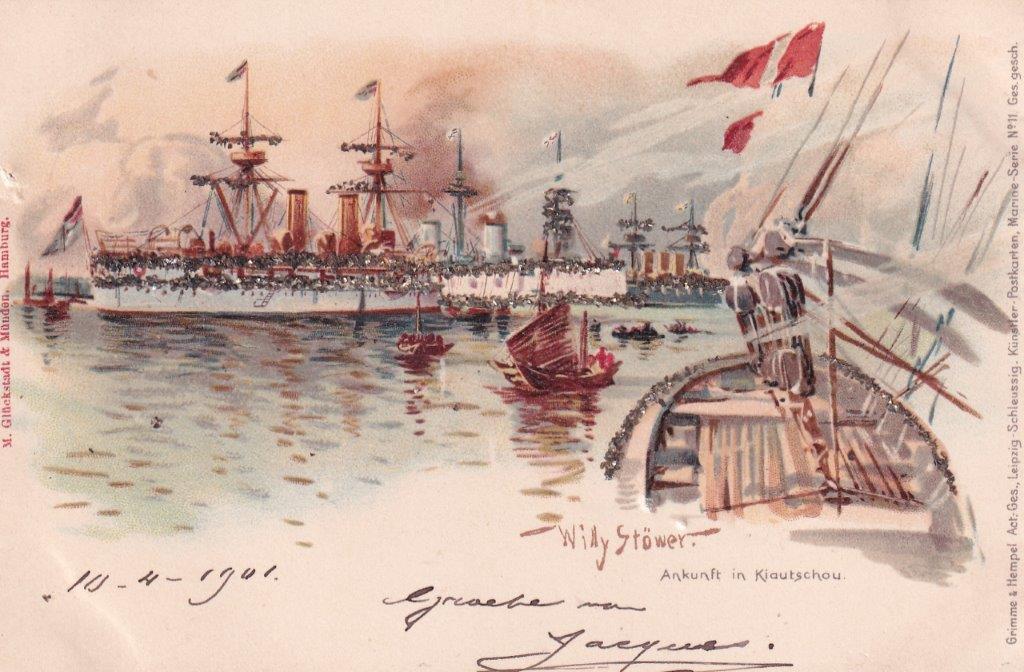
Before the son of a captain came to painting, he learned the profession of locksmith and worked as a technician for various German shipyards. Here he received his first commissions as a painter and illustrator. He became known for his posters, postcards, collector's cards and advertising brochures.
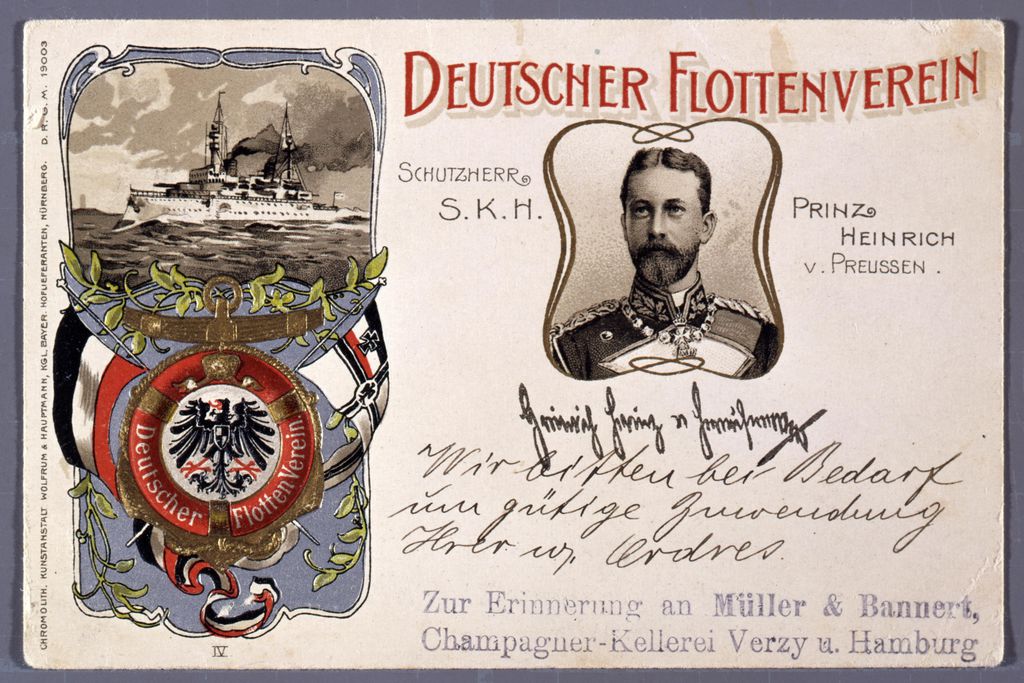
Willy Stöwer was a member of the "German Fleet Association". The purpose of the association was to inspire the people for the expansion of an imperial navy. On Germany's way to becoming a world and colonial power, the navy was to make a significant contribution. Stöwer's paintings and illustrations helped to popularize colonial policy among the public.
Warships to collect
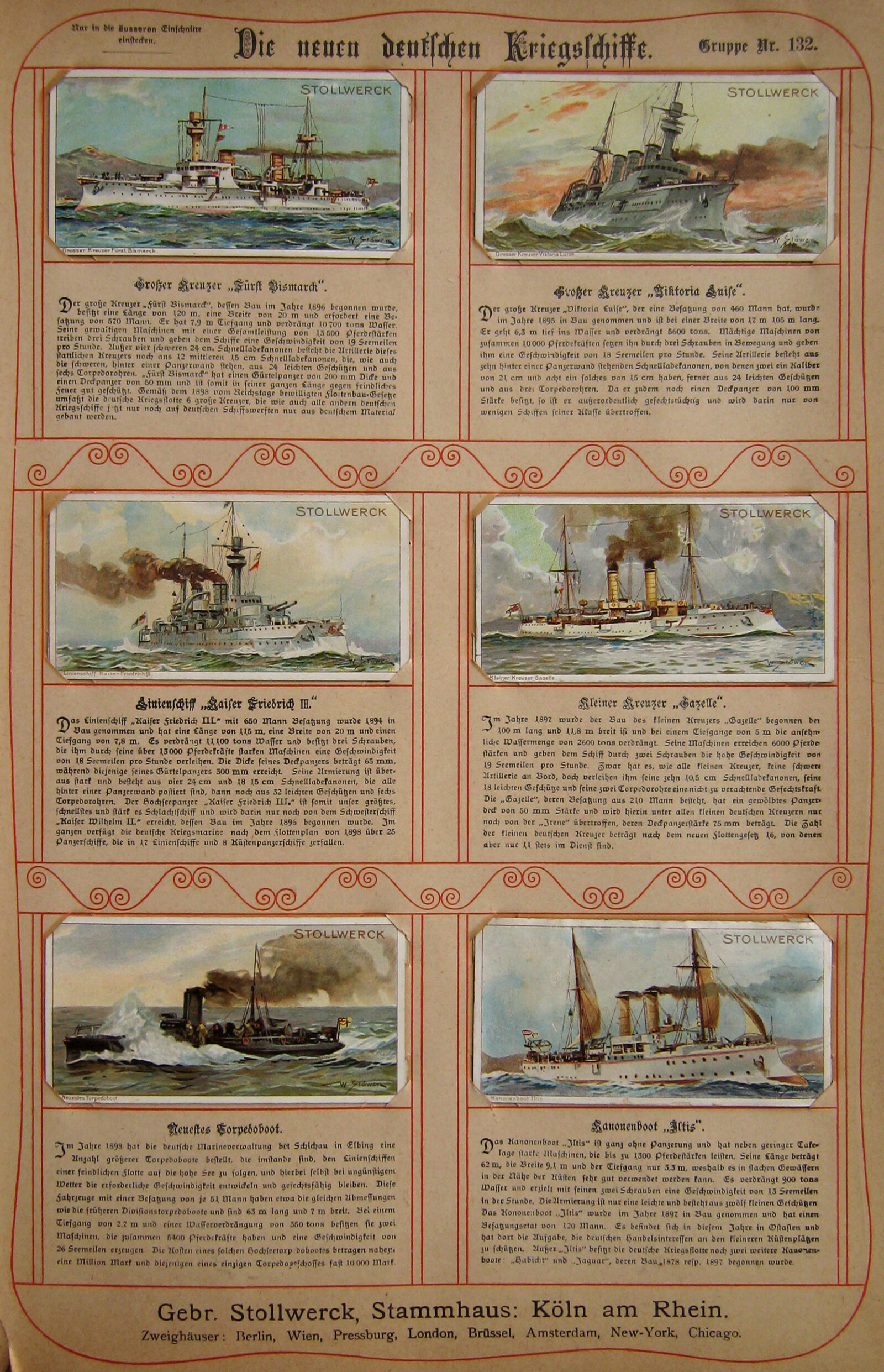
In 1900, the Cologne chocolate producer Ludwig Stollwerck commissioned Willy Stöwer to create the collector's picture series No. 132 for the Stollwerck scrapbook No. 3, title of the series "The New German Warships". Stöwer used photographs as models or developed his motifs from his imagination.
In 1840, Franz Stollwerck used so-called "picture chocolate" for advertising purposes for the first time. They were printed pictures in the wrapping paper of chocolate. His son Ludwig further developed the idea from single pictures to collector's cards. With the installation of vending machines around 1900, a great enthusiasm for collecting began among adults and children alike. The motifs ranged from impressions of the city to patriotic content.
German Fleet Association
With Kaiser Wilhelm II, Bismarck's previous foreign policy was turned away. "We don't want to put anyone in the shade, but we also demand our place in the sun," demanded the State Secretary of the Foreign Office, Bernhard von Bülow, in 1897 during a debate on colonial policy. In the endeavor to pursue world politics, a powerful fleet, along the lines of Great Britain, was inevitable.
The "German Fleet Association" had the task of making the benefits and advantages of a war fleet popular among the population. Just one year after its founding in Berlin in 1898, the association had almost 80,000 members, which included military and war clubs as well as the chambers of commerce. To this day, the "Fleet Street" in Reinickendorf is a reminder of the political power of the association.
Claudia Wasow-Kania
Imke Küster
- LOCATION
- TODAY
Citing the article
Claudia Wasow-Kania, Imke Küster: Marine Painter Willy Stöwer – Warships to Collect. In: Kolonialismus begegnen. Decentralised Perspectives on Berlin's City History. URL: https://kolonialismus-begegnen.de/geschichten/marinemaler-willy-stoewer-kriegsschiffe-zum-sammeln/ (23.11.2024).