Traces of Adelbert von Chamisso in Kreuzberg
Adelbert von Chamisso died on 21 August 1838 and was buried a short time later in Cemetery III of the Jerusalem and New Church in front of the Hallesches Tor in Berlin Kreuzberg.
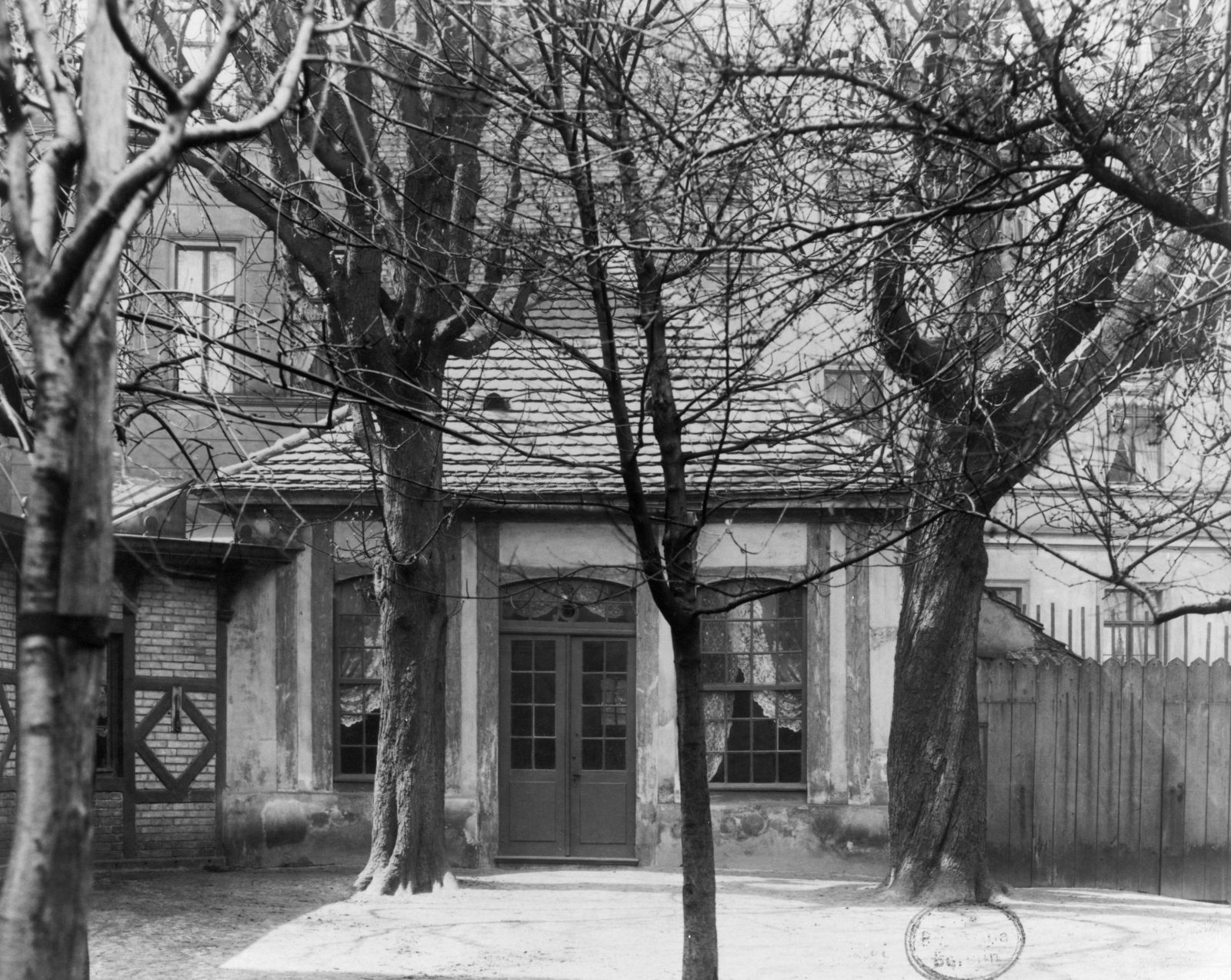
Near Bergmannstraße in Kreuzberg is Chamissoplatz. The square, which was named in 1890, and the surrounding buildings were built as part of the Hobrecht Plan – a development plan for the rapidly growing city of Berlin. On the site where his former home at Friedrichstraße 235 stood, hangs a memorial plaque for him. Chamisso is still publicly honored today because he was a highly esteemed German-language poet and a successful botanist in the 19th century.
Particularly relevant to his life's work was the so-called "Rurik" expedition under the leadership of Otto von Kotzebue, in which Chamisso took part between 1815 and 1818. It first led via Tenerife to Brazil and Chile and, after a detour to the Bering Sea, to Polynesia, Micronesia and Hawaii. Chamisso wrote about this in his book "Journey around the World", published in 1836, such research trips were at that time directly related to colonial efforts. Chamisso himself, however, is often portrayed in academia, biographies and media reports as an open, curious cosmopolitan and critical of colonialism. However, he was a child of his time and involved in colonial practices as a scientist and writer.
Adelbert von Chamisso was born Louis Charles Adélaïde de Chamissot de Boncourt in France in 1781, but his noble parents lost their property during the French Revolution. They saw their lives in danger and fled. The family reached Berlin in 1796 via detours. Chamisso attended the French grammar school there. As a young adult, he was initially in the military, but felt strongly attracted to literature and poetry. He began to write poetry[2] and move in literary circles. Among his friends was, for example, the romantic E. T. A. Hoffmann.
In his early 30s, in 1812, Chamisso began studying medicine and natural sciences at the newly founded Berlin University, laying the foundation for his career as a naturalist. After three years of study, Chamisso was hired as a botanist for the Rurik expedition led by Otto von Kotzebue. Kotzebue planned to sail around the world in a brig on behalf of the Russian Chancellor of the Exchequer, Count Nikolai Rumjancev. The official mission was to explore the northeastern passage through the Bering Strait, which was unknown to Europeans until then. If it had been found and passable for Russian fleets, it would have meant a drastic shortening of sea routes at the time and thus an enormous economic advantage. [4]
In addition, there was an unofficial order for Kotzebue to provide food for the Russian-American Trade Company (RAK): The RAK successfully traded in Siberian sea otter skins, for which it enslaved native men of the Aleutian Islands, and was dependent on supplies from regions further south for the continuation of the trading base in the far north. A Russian base in Hawaii would have been useful for this. Together with other members of the Tsar's family, the expedition's financier, Rumjancev, was the main shareholder of the RAK and privately a passionate collector in the fields of cultural property and science. [5]
During most of the journey, Chamisso was not aware that, in addition to the search for passage through the Bering Strait, the RAK was also to be provided with food to maintain its exploitative business. [6] He was driven above all by his own interests, which were clearly focused on research and gaining knowledge. Chamisso wanted to follow his passion for collecting and get to know the ways of life, cultures and languages of population groups and regions unknown to him. [7]
During the voyage, he had to follow the orders on the Russian warship. [8] The biographer Beatrix Langner describes the relationship with Kotzebue in particular as marked by conflict. When the Rurik entered a wide sound off the coast of Alaska that was not marked on Kotzebue's map, he named it after himself and a rocky reef after Chamisso, despite all the conflicts. [9] They met Inuit, who of course already had other names for all the places that Europeans visited for the first time. To this day, however, the name Chamisso Island has prevailed, but even Wikipedia now also lists the island name of the local Iñupiat – Iguagvik. Even though Langner writes that Chamisso did not feel like an explorer, he did not oppose the exploratory and colonial practices of naming and robbing. [11] At the time, these actions were simply part of the European understanding of law: "According to the international law in force at the time, anyone who first set foot on unknown land had the right of ownership of that land, its people, mineral resources and natural products". [12] The Eurocentric perspective of this understanding is expressed in the fact that international law only included Europeans and was exclusively about land unknown to Europeans. Political scientists Chandra-Milena Danielzik and Daniel Bendix criticize the European discovery narrative behind travel to areas that Europeans were previously unaware of, as these were never free of interests in a colonial context. "Rather, it was about the exploitation of people and raw materials, the development of trade routes and the production of knowledge." [13] All of this also applies to the Rurik expedition.
As a botanist, Chamisso's task was to collect and classify plants during the journey. Londa Schiebinger and Claudia Swan, whose field of research lies in the history of science, would certainly place Chamisso's work in their definition of colonial botany: "colonial botany" is the study, naming, cultivation, and marketing of plants from colonial contexts. This branch of science emerged with European sea voyages, conquests, and global trade. [14] Chamisso collected a total of 20 boxes of plants, stones, and bones, which he took with him to Europe in airtight seals. [15] For this reason, not only is the island of Iguagvik north of the Bering Strait still named after Chamisso, but also numerous plants. For example, he sent South American plants to the director of the Botanical Garden in Berlin, Heinrich Friedrich Link, for identification upon his return. The genus was unknown to European scientists, so Link gave it the name Chamissonia. [16] With the renaming by Europeans, earlier knowledge of indigenous locals is overwritten – and is not always reconstructible to this day.
After stays in South America and the Bering Strait, the Rurik reached the Marshall Islands via Hawaii. It was there that it became most evident that Chamisso had an understanding of "noble savages" rather than deliberately degrading the local population as backward and primitive. He spent a few days with a local family under the same roof and made extensive ethnographic notes full of admiration. In his notes, he calls the Polynesians kind, trusting, and unspoiled. Langner suggests that many positive conclusions about the islanders "were probably more due to the longing for peaceful coexistence of all people." [17] Chamisso's observations about the Polynesians are at least partly projections. His view of the people he met throughout the journey can never be completely separated from the Eurocentric perspective that was common in Europe at the time, but he certainly stands for a more benevolent interest in the "Other" than many of his contemporaries.
Before the voyage neared its end, the Rurik headed north once more. This second visit to the Bering Sea showed that the small brig was not suitable for traveling in the ice and that after years on the ship, the entire crew was also suffering from exhaustion. It was time to go home, although Kotzebue had not successfully carried out his orders. After all, the Rurik brought some cultural assets and even people back to Russia. In an easily overlooked sentence, Langner notes that shortly before departure, several young Inuit who were to be taken to St. Petersburg received the smallpox vaccination. [18] From the beginning of the earliest colonial expeditions, numerous locals from regions far away from Europe were brought back as "living trophies". [19] As a rule, little can be said about their fates – their forced resettlements. Especially from their own perspective, there are only in the rarest of cases records of how they fared.
Returning to Berlin, Chamisso married, had children and finally moved to Friedrichstrasse 235, in the middle of today's underground stations Hallesches Tor and Kochstraße, where he lived until the end of his life. He now advanced his scientific career. In 1821, Kotzebue's report on the Rurik expedition was published, for which Chamisso wrote the scientific section under the title "Remarks and Views". The cultural scientist Ottmar Ette mentions Chamisso's displeasure with this arrangement and describes it as a continuation of the difficult relationship with Kotzebue. Chamisso was forbidden to publish his travelogue in advance under his own name. He had to wait for Kotzebue's report, in which his scientific results were only found in a less prominent place in the third volume. [21] In 1836, only 18 years after his return from the journey, Chamisso's own book "Journey around the World" was published. Chamisso is rather modest in it: "Observing, collecting and storing for science is described here as a long learning process in which the researcher need not be ashamed of his temporary ignorance". [22] Chamisso's travelogue was well received and was probably read aloud by his contemporary and role model Alexander von Humboldt himself at the royal court. Humboldt called Chamisso's work a representation of a "world drama" and his prose "uninhibited, simple and free". [23]
Chamisso, who himself struggled with the question of belonging throughout his life and had witnessed several European conflicts, was particularly interested in conviviality. Ette explains that Chamisso repeatedly dealt with questions and challenges of the coexistence of people of different nations, languages or cultures, including between Europeans and indigenous peoples. [24] During the 19th century, biologistic racial research – a pseudoscience from today's perspective – became popular, from which Chamisso clearly distanced himself. [25] Chamisso's "Journey Around the World" rather proved his fascination for other ways of life. His reflections on the indigenous population of the Marshall Islands are protective and admiring, but also exoticizing:
I also take this opportunity here to lodge a solemn protest against the term "savages" in its application to the South Sea islanders. I like to combine certain terms with the words I use as much as I can. A savage for me is the man who, without a fixed abode, agriculture and domesticated animals, knows no other possession than his weapons, with which he feeds himself by hunting. Where the South Sea islanders can be blamed for corruption of morals, it seems to me that this does not testify to savagery, but rather to over-civilisation. The various inventions, the coin, the writing, etc., which are apt to measure the different stages of civilisation on which the peoples of our continent find themselves, cease, under such altered conditions, to furnish a standard for these insularly separated human families, who live under this blissful sky without yesterday and tomorrow for the moment and for enjoyment. [26]
According to Chamisso, Polynesians had a standard of living that can also be considered civilized from a European perspective of the 19th century. At the same time, he sees them as people who live in a kind of remote paradise where writing and money are not needed. Chamisso romanticizes life on the islands, which can simply be beautiful and carefree, as if there were no past or future. This exoticism sounds positive at first. In fact, however, exoticism is an inherent part of racism according to today's understanding. Polynesians are clearly constructed as "different" through the romanticizing gaze. Only non-white people and regions are exotic. In addition, Chamisso later refutes his own observations by referring to warlike conflicts between the various islands. [27] So under the aforementioned blissful sky, there is not only enjoyment after all.
Towards the end of his life, Chamisso turned even more intensively to manners in other countries. His last scientific publication dealt with the structure and structure of the Hawaiian language. Ette explains Chamisso's interests with his own multilingual biography: "For him, too, the world could not be grasped and understood solely from the perspective of a single language." [28] Chamisso lived most of his life in Berlin, but due to his French origins, he did not always feel he belonged. His scholarship is focused on bridging cultural gaps that preoccupied him personally.
Chamisso's literary and scientific work is certainly worth remembering. The memory of him, which is visibly integrated into the cityscape of the Berlin-Kreuzberg district, where he lived until the end, is well deserved. But this does not mean that this historical person and the practice of remembrance cannot be critically approached today. Often the only written sources about botany in distant countries are colonial travelogues such as those of Chamisso or Kotzebue.
In the official taxonomy used today, usually only the colonial designations appear. From a postcolonial perspective, it is relevant to ask what knowledge is accessible in the present and what knowledge has been made invisible or even lost. In an interview, the writer and environmental historian Jessica J. Lee explains an often forgotten fact: foreign botany was often only possible thanks to local knowledge and local manpower. [29]
Chamisso's scientific work also drew on encounters with the local population in various places around the world. After all, he mentions some of these moments of exchange in his work with respect. Nevertheless, it is he who has gone down in history and in the Berlin cityscape. It is after him that plants and places were named.
Anna von Rath
- LOCATION
- Cemetery III of the Jerusalem and New Church Congregation on Tempelhofer Straße
- TODAY
- Mehringdamm 21
Citing the article
Anna von Rath: Spuren von Adelbert von Chamisso in Kreuzberg. In: Kolonialismus begegnen. Dezentrale Perspektiven auf die Berliner Stadtgeschichte. URL: https://kolonialismus-begegnen.de/geschichten/adelbert-von-chamisso-im-oeffentlichen-raum/ (03.03.2025).
Literature & Sources
[1] Cf. Ette, Ottmar, "Von Georg Forster zu Adelbert von Chamisso. Reisen um die Welt" in: Mobile Preußen. Ansichten jenseits des Nationalen, Stuttgart 2019; Langner, Beatrix, Der wilde Europäischer (The Wild European), Berlin 2008; Duhm-Heitzmann, Jutta, "Geburtstag Adelbert von Chamisso" in: ZeitZeichen, Hamburg 30.1.2011, NDR, pp. 197-220
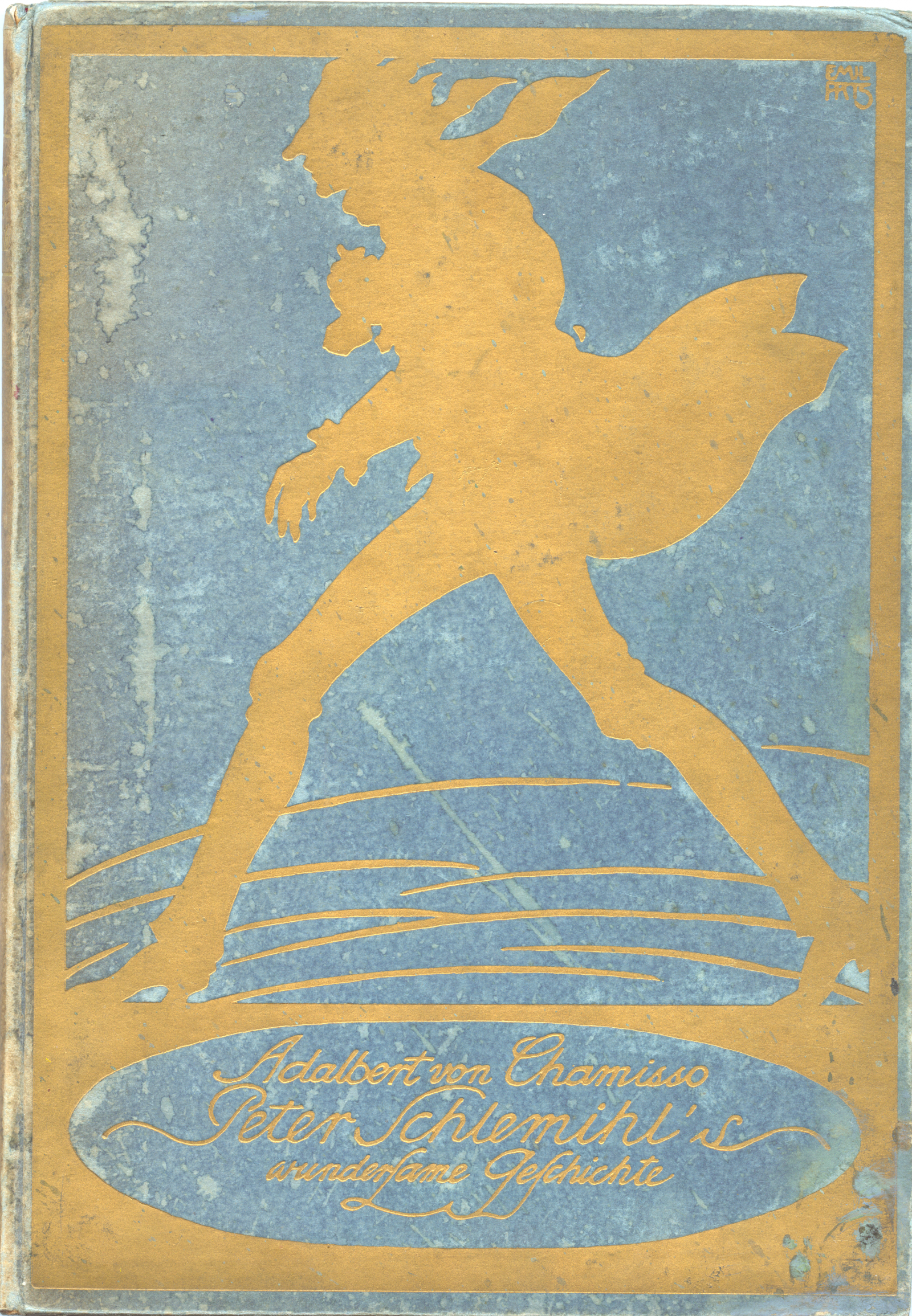
[2] He published poems in the Musenalmanach and later wrote the novella "Peter Schlemihls wundersame Reise" (1908), which helped him to gain a certain notoriety.
[3] Cf. Ette, Von Georg Forster zu Adelbert von Chamisso, p. 210.
[4] Maaß, Yvonne, Leuchtkäfer und Orgelkoralle. Chamissos Reise um die Welt mit der Romanzoffischen Entdeckungs-Expedition (1815-1818) im Wechselspiel von Naturkunde und Literatur, Würzburg 2016, p. 23.
[5] Cf. Maaß, Leuchtkäfer und Orgelkoralle, p. 23.
[6] Cf. Langner, Der wilde Europäischer (The Wild European), p. 153.
[7] Cf. Maaß, Leuchtkäfer und Orgelkoralle, p. 23.
[8] Cf. Ette, Von Georg Forster zu Adelbert von Chamisso, p. 215
[9] Cf. Langner, Der wilde Europäischer (The Wild European), p. 195.
[10] Although it is unclear exactly how long humans lived in the region of what is now northwestern Alaska, there is research that suggests that humans inhabited this land as early as 10,000 – 12,000 years ago (Burch 2005: 10). Nevertheless, Europeans falsely claim to have "discovered" these areas.
[11] Cf. Langner, Der wilde Europäischer (The Wild European), p. 192.
[12] Cf. ibid., p. 195.
[13] Danielzik, Chandra-Milena/Bendix, Daniel, "Discover", in: Arndt, Susan/Ofuatey-Alazard, Nadja (eds.), How Racism Speaks from Words. (K) Erben des Kolonialismus im Wissensarchiv Deutsche Sprache, Münster 2011, pp. 264-269, here p. 266.
[14] Schiebinger, Londa/Swan, Claudia, "Introduction", in: Dies. (ed.), Colonial Botany: Science, Commerce, and Politics in the Early Modern World, Philadelphia 2007, pp. 1-18, here p. 2.
[15] Cf. Langner, Der wilde Europäischer (The Wild European), p. 229.
[16] Cf. ibid., p. 246.
[17] Cf. ibid., p. 219.
[18] Cf. ibid., p. 227.
[19] Cf. ibid., p. 209.
[20] For further insights into the topic of colonial abduction, read the article on Sabac el Cher.
[21] Cf. Ette, Von Georg Forster zu Adelbert von Chamisso.
[22] Cf. ibid.
[23] Humboldt, Alexander, letter to Adelbert von Chamisso dated 16.05.1836, estate of Adelbert von Chamisso, Staatsbibliothek zu Berlin, acc. Ms. 1937, p. 183.
[24] Cf. Ette, Von Georg Forster zu Adelbert von Chamisso.
[25] Cf. Langner, Der wilde Europäischer (The Wild European), p. 297.
[26] Von Chamisso, Adelbert, Peter Schlemihls wundersame Reise. Mit Illustrationen von Emil Preetorius, Leipzig 1908, p. 75.
[27] Cf. Langner, Der wilde Europäischer (The Wild European), p. 224.
[28] Cf. Ette, Von Georg Forster zu Adelbert von Chamisso.
[29] Lee, Jessica, "Two Trees Make a Forest: An Interview with Jessica J. Lee", n: Poco.lit. – Platform for Postcolonial Literature, 15.06.2020 https://pocolit.com/2020/06/15/zwei-baeume-machen-einen-wald-ein-interview-mit-jessica-j-lee/ .
Tags
#Adelbert of Chamisso#Alexander von Humboldt#Botanischer Garden#Chamisso Island#colonial botany#Entdeckungsreise#Erinnerungskultur#Exotisierung#Exotismus#Expedition#Friedhof III of the Jerusalem and New Church#Gedenken#Gedenktafel#globaler Trade#Hobrecht Plan#Landaneignung#lebende Tropphäe#Literatur#Marshall Islands#Mobilität#Mobilitätsrouten#Naturwissenschaft#Neugier/Wissensdrang#Otto von Kotzebue#Routen#Sammelleidenschaft#Seereise#Straßenname#Straßennamen#Universität#Wisssenschaft