Friedenau Reich Compensation Office
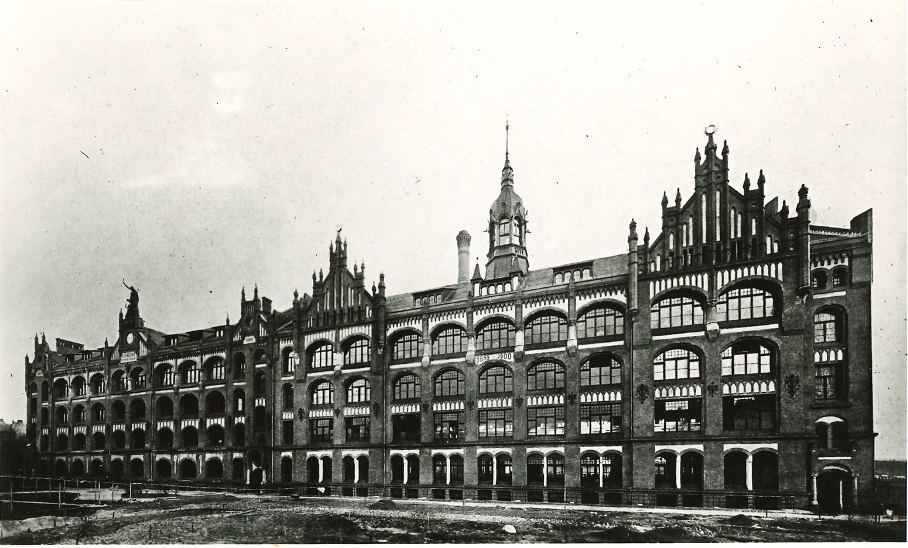
After Germany's defeat in the First World War and the associated end of the German colonial empire, a large proportion of Germans were expelled from the former colonies. From 1927 onwards, the Reich Compensation Office was located in the building of the former Goerz factory at Rheinstraße 45/46, which is still partially preserved today. Losses could be entered down to the smallest detail in an eight-page questionnaire of the office and compensation payments could be demanded. However, post-war inflation, reparation payments and economic difficulties prevented the payments from being processed quickly.
Many of the so-called 'colonial Germans' who returned to Germany often had to wait ten years for their claims to be settled. The lengthy and inadequate processing disappointed many Antragsteller_innen. Many Germans blamed the democratic government of the Weimar Republic for their lost position of power, as well as their financial losses and lost possessions.
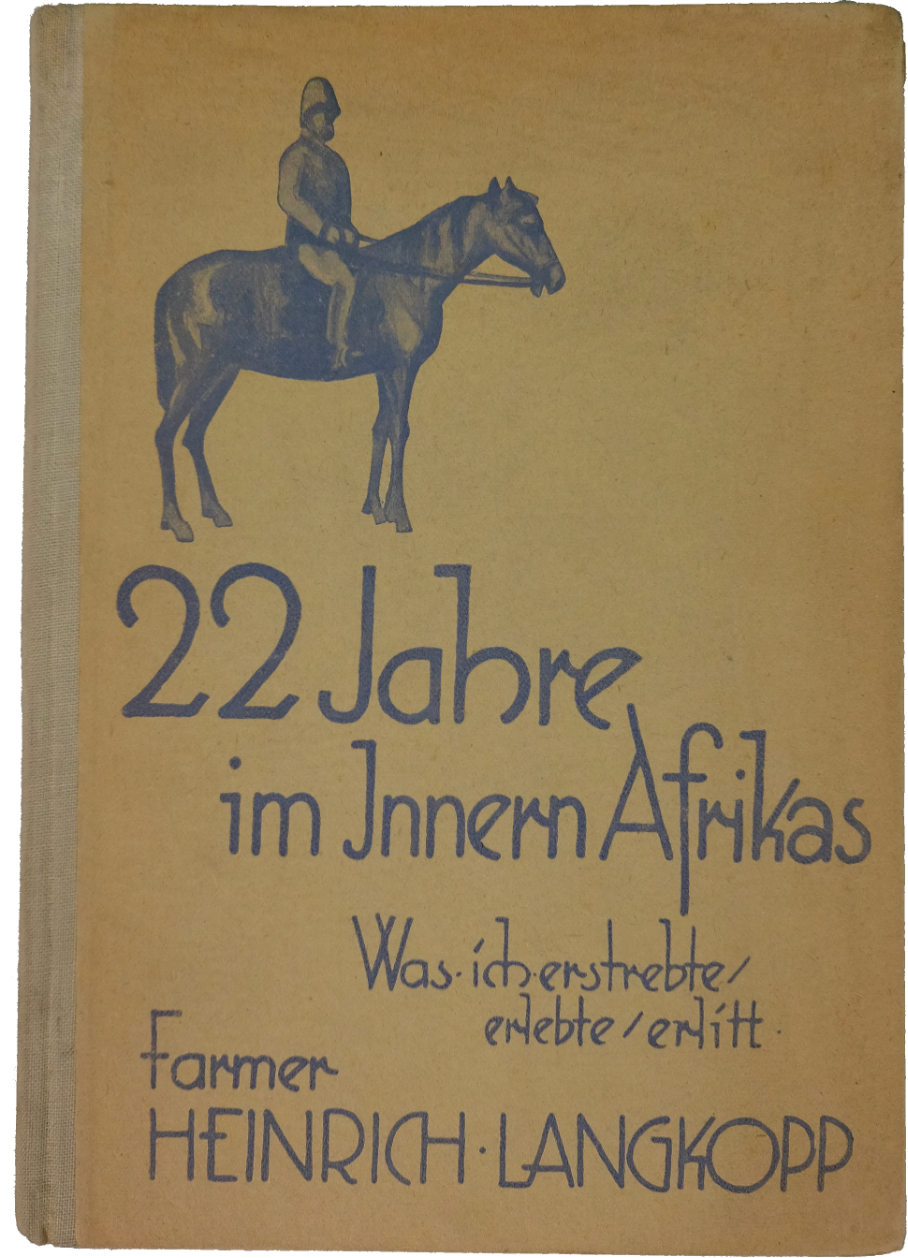
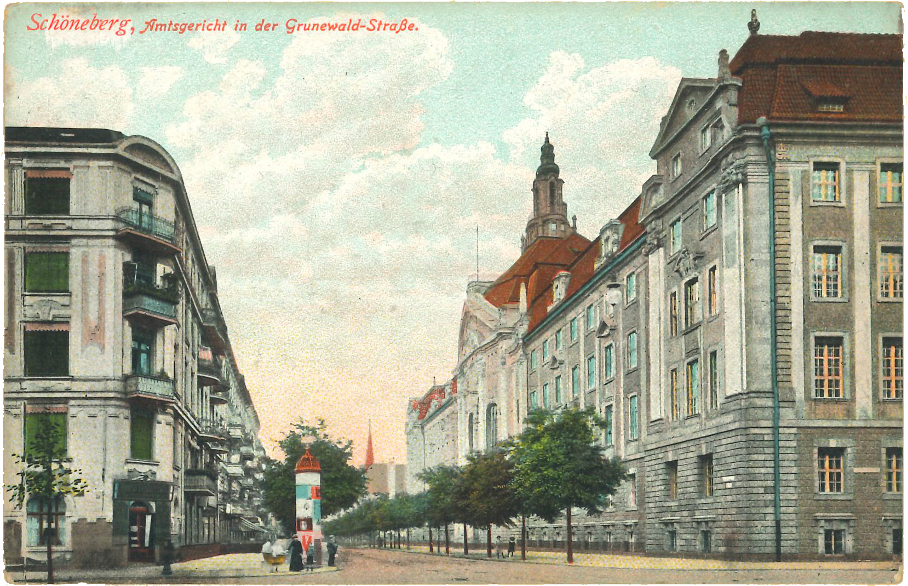
In March 1928, the cattle breeder Heinrich Langkopp, who had previously worked in German-East Africa (now Tanzania), entered the Reich Compensation Office and demanded payment of his compensation with the help of a pistol and a homemade bomb. After four hours, the employees succeeded in disarming Langkopp. A trial took place in the Schöneberg district court in Grunewaldstraße, whose sentence in the case of the attempted assassination was mild: five months in prison and a fine of 50 marks. In fact, Langkopp's act had the approval of numerous Vertreter_innen colonial organizations. In his book "22 Years in the Interior of Africa. What I Aspired To, Experienced, Suffered", published in 1929, he described his trial as well as nostalgic memories of his time in German East Africa. He wrote self-justifyingly: "A 'shock shot' planned by me was perceived as a bomb attack. A gigantic trial then followed, but the sympathies of everyone took my side." However, the compensation payment hoped for by Langkopp failed to materialize.
Trials were nothing new for Langkopp. In the colony of German East Africa, the farmer was tried several times until 1914. Again and again, racist jurisprudence was evident here: the repeated mistreatment of African subordinates was hardly punished, but the insult of German officials was severely punished. A double standard and pattern that was also evident in the compensation payments. For the native population in the colonies never had the opportunity to apply for compensation payments, although many had previously been robbed of their land, their possessions and their freedom in large numbers.
Until recently, there was hardly any debate about this widespread expropriation of the local population. It was not until 2017 that a current class action lawsuit by Vertreter_innen of the Herero against the Federal Republic of Germany brought the issue increasingly into the public eye. The court case, which was conducted in the USA, was about the expropriations and genocide of the Herero. Although the lawsuit was dismissed in 2019, further negotiations now began directly between Namibia and Germany. In May 2021, the Federal Foreign Office announced an agreement consisting of the disbursement of 1.1 billion euros for a reconstruction and development programme. However, the word "compensation" was still deliberately avoided. For the other former German colonies, such discussions were long awaited. In 2020, Abdallah Possi, Tanzanian ambassador in Berlin, called for "negotiations on reparations" for crimes committed in East Africa during the German colonial era. In November 2023, during his visit to Tanzania, German President Frank-Walter Steinmeier asked for forgiveness from the descendants of those injured and killed in the Maji-Maji War. Many Tansanier_innen hope that this will also be followed by negotiations on compensation.
This text is the revised version of a chapter from the exhibition "Research Workshop: Colonial History in Tempelhof and Schöneberg", which the Schöneberg Museum showed from 19.5. to 29.10.2017.
Stefan Zollhauser
Johanna Strunge
- LOCATION
- Reich Compensation Office
- TODAY
- Rheinstraße 45/46
Citing the article
Stefan Zollhauser, Johanna Strunge: Friedenauer Reichsentschädigungsamt. In: Kolonialismus begegnen. Decentralised perspectives on Berlin's urban history. URL: https://kolonialismus-begegnen.de/geschichten/friedenauer-reichsentschaedigungsamt/ (12.06.2024).
Literature & Sources
Norbert Aas/Harald Sippel: Koloniale Konflikte im Alltag. Eine rechtshistorische Untersuchung der Streitungen des Siedlers Heinrich Karl Langkopp mit der Kolonialverwaltung in German-Afrika und dem Reichsentschädigungsamt in Berlin (1910-1929), Bayreuth 19972.
Dirk Hainbuch: The Reich Ministry for Reconstruction 1919 to 1924. The Settlement of the First World War. Reparations, War Damage Removal, Victim Compensation and the Reconstruction of the German Merchant Fleet, Frankfurt (Main) 2016.
On the agreement between Germany and Namibia: https://www.bpb.de/kurz-knapp/hintergrund-aktuell/335257/voelkermord-an-herero-und-nama-abkommen-zwischen-deutschland-und-namibia/ (last accessed 20.05.2024)
On the discussion about Steinmeier's apology and possible compensation for Tanzania: https://www.dw.com/de/tansania-steinmeiers-entschuldigung-ein-erster-schritt/a-67298090 (last accessed 20.05.2024); https://www.dw.com/de/kolonialverbrechen-deutschland-und-tansania-wollen-aufkl%C3%A4ren/a-65068986 (last accessed 20.05.2024); https://taz.de/Deutsche-Kolonialverbrechen-in-Tansania/!5969664/ (last accessed 20.05.2024)