Lion figures at the German Colonial House
Accompanying the exhibition "Colonial Traces of Reinickendorf's Industrial History" in the GalerieETAGE, selected objects were also examined for their colonial traces and contexts in the rooms of the permanent exhibition in the Reinickendorf Museum.
With the participation of a focus group of students from the Thomas-Mann-Gymnasium (Johanna Grace Ampofo, Amanda Calista Williams, Ibrahim Sow, John Kossi Gbeassor), digital interventions for visitors were developed (Link) that open up multi-perspective views of the exhibits.
The contributions have been thoroughly reviewed and revised for digital presentation. We recommend the introductory text on Reinickendorf's colonial past (Link) to get started.
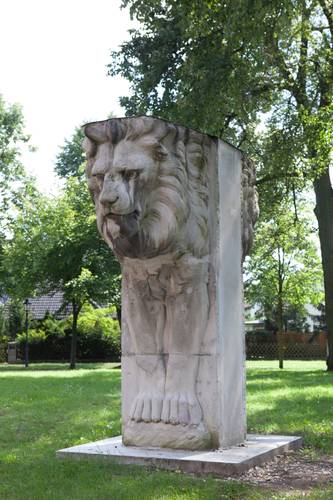
Lion figures at the German Colonial House
Company: Deutsches Kolonialhaus Bruno Antelmann
Founded: 1896
Sale of products from the colonies: food (such as coffee, cocoa, fruit tea, tobacco and cigarettes, spices, sugar, peanut oil, coconut oil) as well as "exotic" luxury items (such as ivory figurines, lion skins, ostrich feathers)
Since 2015, there has been a stone double lion figure on the forecourt opposite the entrance to the Reinickendorf Museum, which has become the museum's distinguishing symbol.
Previously, the two lion figures were part of the collection of the "Street Furniture Museum" in the Tegel Center, where architectural decorative objects, lanterns, hydrants and sculpture fragments, among other things, have been collected since 1972. After great interest in the first few years, the pieces were almost forgotten. In order to counteract decay and shrinkage, a large part of the exhibits have been translocated to the museum's garden on the initiative of the Reinickendorf Museum in recent years and have been reinstalled here in a new context as a lapidarium since 2015.
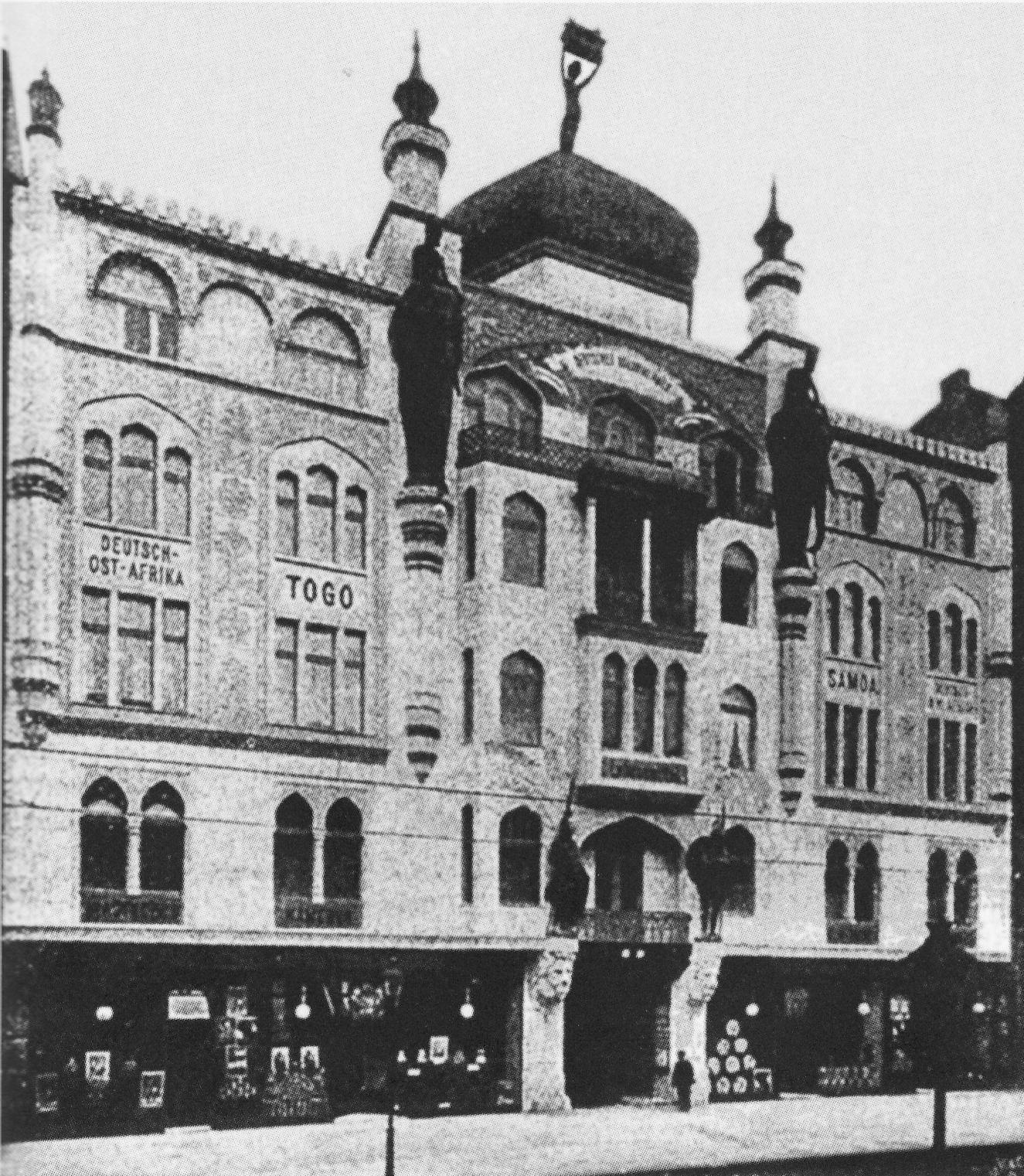
The lion figures originally adorned the portal of the German Colonial House as pilaster figures. After its foundation in the 1880s, Bruno Antelmann opened a new branch in 1903 at Lützowstraße 89/90 (Berlin Tiergarten). The house was destroyed in the Second World War. On the façade there were depictions of Maasai warriors, elephants, palm trees and the names of the German colonies in representative lettering. The shop windows were decorated with "exotic" goods. The design goes back to a European imagination and exoticization of the "foreign" as the ideological foundation of colonialism, which manifested itself here in the juxtaposition of racist stereotypes with the "known and native".
On the occasion of the opening of the new branch in Lützowstraße, the "Deutsche Kolonialzeitung" published a four-page article in its issue of 10.12.1903 with photographs of the magnificent façade and the lavish interior. The new building contained numerous business and storage rooms, offices, a telephone exchange, a supervisory board room, "expedition rooms" (for postal and rail shipping of goods), smaller machine halls with bottling plants and coffee roasting machines.
German Colonial House
The German Colonial House Bruno Antelmann opened at Jerusalemer Strasse 28 in Berlin in the 1880s and specialized in goods from the German colonies. The Antelmann company was the first in Germany to import and publicize products from the German colonies (especially from Togo, Cameroon, German South-West and German East Africa) on a large scale, thus also promoting colonial propaganda and the development of the colonies. For ten years, it was the largest importer of colonial goods and had several branches, including in Leipzig, Frankfurt am Main and Munich. In addition, there were more than 400 sales outlets in other German cities. The reliable control of the authenticity of the products was intended to make the German market independent of the import of foreign colonial products.
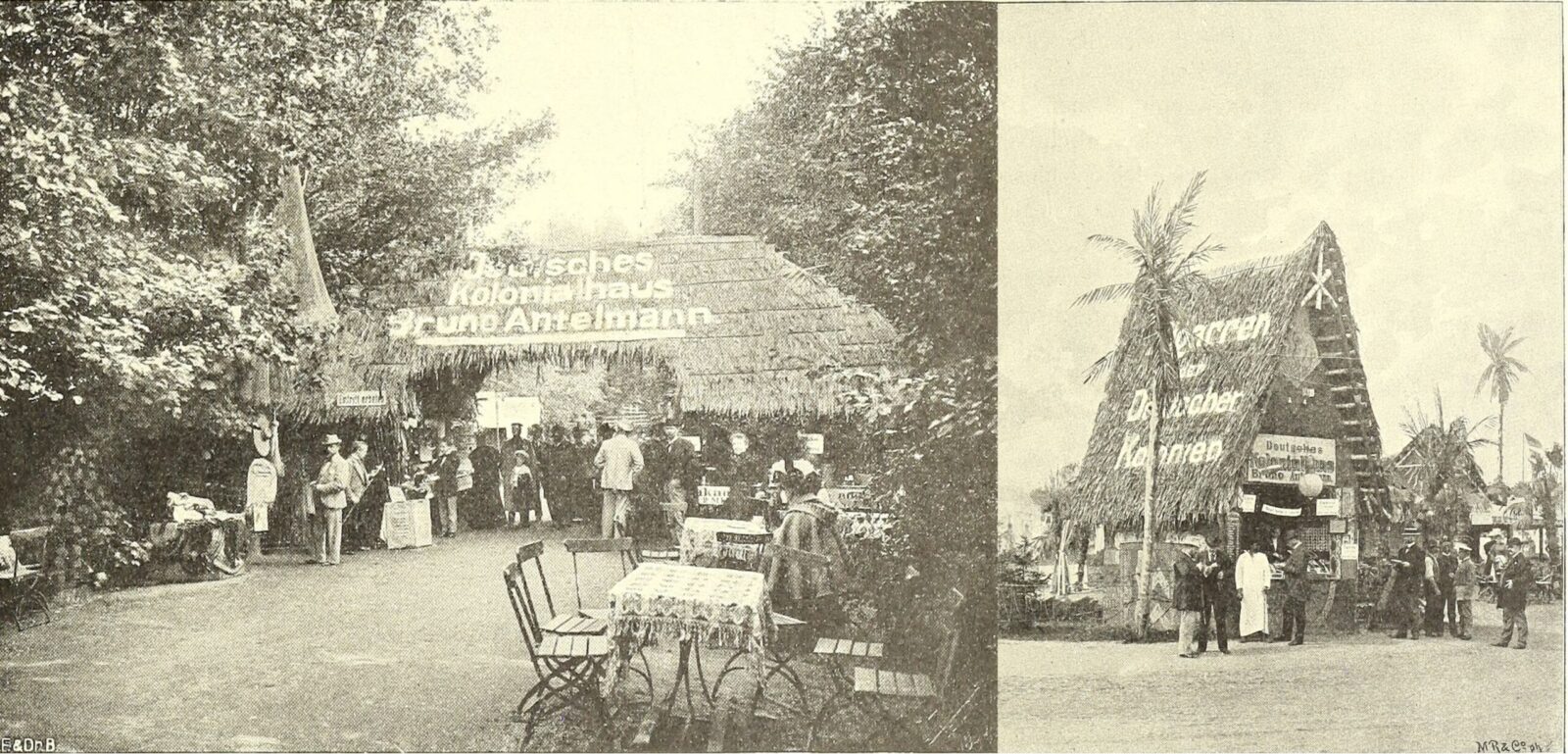
In 1896, Bruno Antelmann was represented with his own sales stand at the "1st German Colonial Exhibition" in Treptow with goods from "German cultivation". At this trade exhibition, the first "people's shows" took place at the same time: blacks and supposedly "savages" were presented to an interested Berlin audience.
From the sales catalogue
A "propaganda" department ensured the nationwide advertising of colonial products. Product names such as "Usambara coffee", "Samoa cocoa" and "Cameroon chocolates", "Kiautschou cigarettes", "New Guinea and Cameroon cigars" referred to their "exotic" origins. The packaging bore witness to a colonialist imagery and reinforced common stereotypes.
For the exclusive taste, the company offered Ethnographica. The range of products included "House Idols from Togo", "Herero Jewellery from Southwest" and "Maasai Spears from East Africa". Exotica items such as ivory carvings, ostrich eggs or lion's claws and other gallantry goods were presented in the shop windows alongside colonial books, atlases, special cards, colonial photographs, matching stamps and postcards. In order to cater to the colonial fantasies of the clientele, stuffed parrots and cockatoos were also available for purchase.
Kaiser Wilhelm II was also infected by the "exoticism" of the German colonial house: Bruno Antelmann was appointed purveyor to the court.
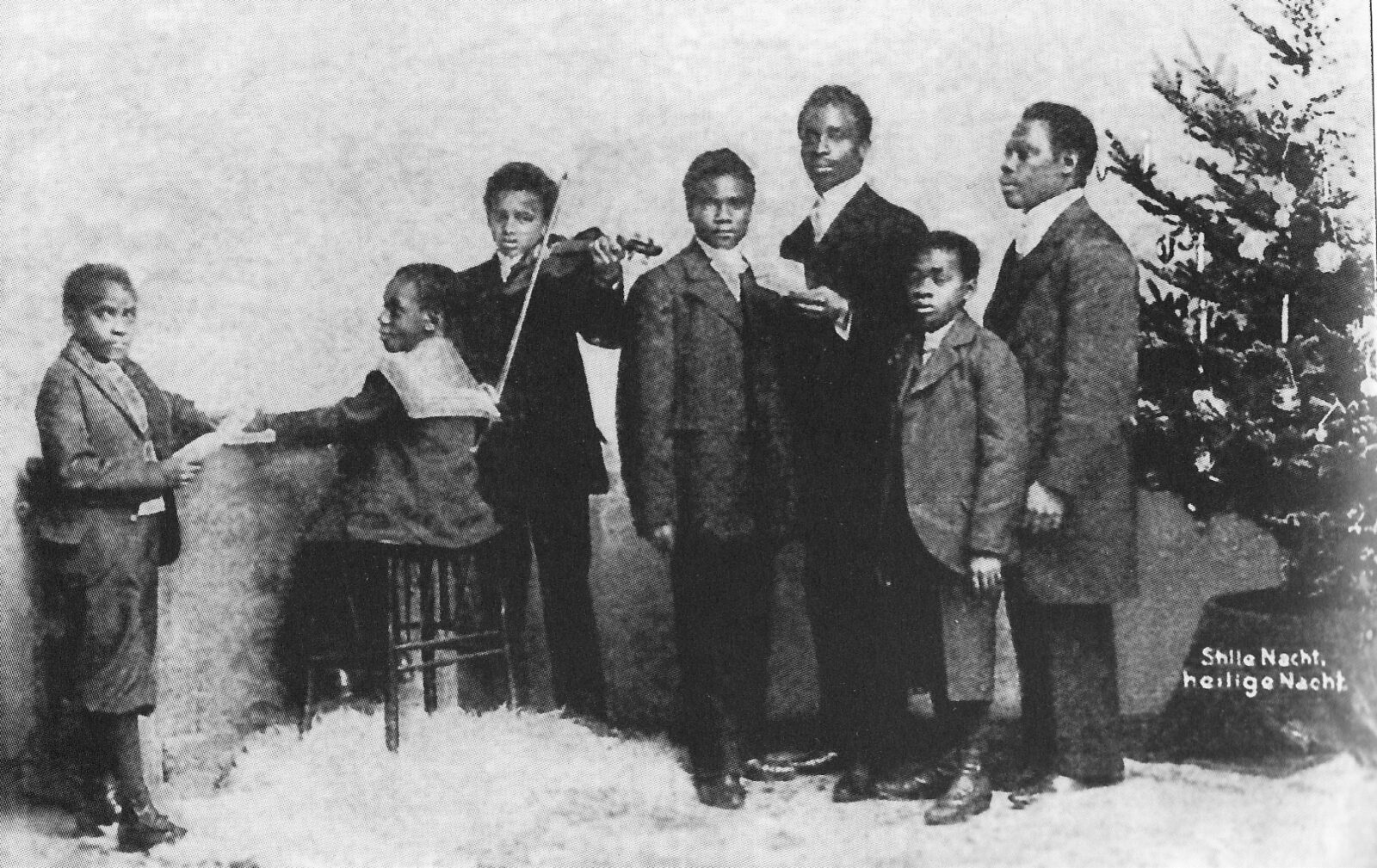
When "tropical children cultivate German customs"
In 1901, the German Colonial House, at that time still headquartered at Jerusalemerstraße 28, attracted the attention of the Berlin public with a special Christmas party. The black employees and their children were abused for advertising purposes to sing "Silent Night, Holy Night", accompanied by piano and violin sounds under the Christmas tree. The German Colonial Newspaper reported on this in detail. Many of the employees in the German Colonial House came from the German colonies themselves and were supposed to complete the exotic flair in the sales rooms.
German Colonial Society
The German Colonial Society (DKG) was founded in 1887 as a civil society group. According to its statutes, the goals of the society were an expansive colonial policy, the safeguarding of the existing German colonies, the strengthening of their economic use and scientific research, and the winning over of all "parties in the German Reich for the German-colonial cause". Together with the German Fleet Association and the Reich Naval Office, the DKG financed the naval armament of the Imperial Navy under Kaiser Wilhelm II.
Every week, the DKG propagated its ideas in the "Deutsche Kolonialzeitung", in addition to which the society published a large number of brochures and pamphlets, organized exhibitions and lectures, and exerted influence on education in schools and universities.
The DKG was an influential organization in the German Empire with well-known personalities at its head and reached a membership of up to 43,000 of the upper middle class.

Claudia Wasow-Kania
Imke Küster
- LOCATION
- Lützowstraße 89/90, Berlin Tiergarten
- TODAY
- Alt-Hermsdorf 35, 13467 Berlin (Opposite the entrance of the Reinickendorf Museum)
Citing the article
Claudia Wasow-Kania, Imke Küster: Lion Figures at the German Colonial House. In: Kolonialismus begegnen. Decentralized Perspectives on Berlin's City History. URL: https://kolonialismus-begegnen.de/geschichten/loewenfiguren-am-deutschen-kolonialhaus/ (23.11.2024).
Literature & Sources
Tags
#Bruno Antelmann#Burundi#German-East Africa#German-South West Africa#Deutsche Colonial Society#Deutsche Colonial Newspaper#Deutsches Colonial House#Elfenbeinfigürchen#Erdnussöl#Ethnographica#Exotika#Exotisierung#Früchtetee#Gewürze#Kaffee#Kaiser Wilhelm II#Kakao#Kamerun#Kokosfett#Kolonialausstellung#Kolonialprodukte#Löwenfelle#Menschenzoo#Namibia#Propaganda#Ruanda#Straußenfedern#Tabak#Tansania#Togo#Treptow#Völkerschau#Zigaretten#Zucker