A street honors Hermann von Pückler-Muskau
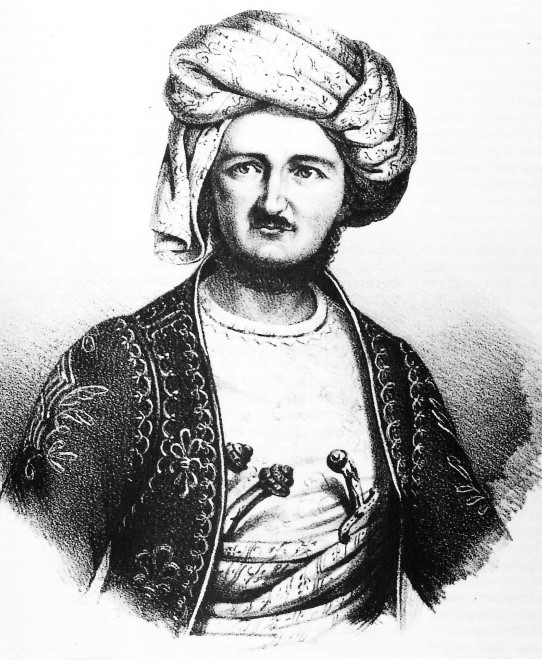
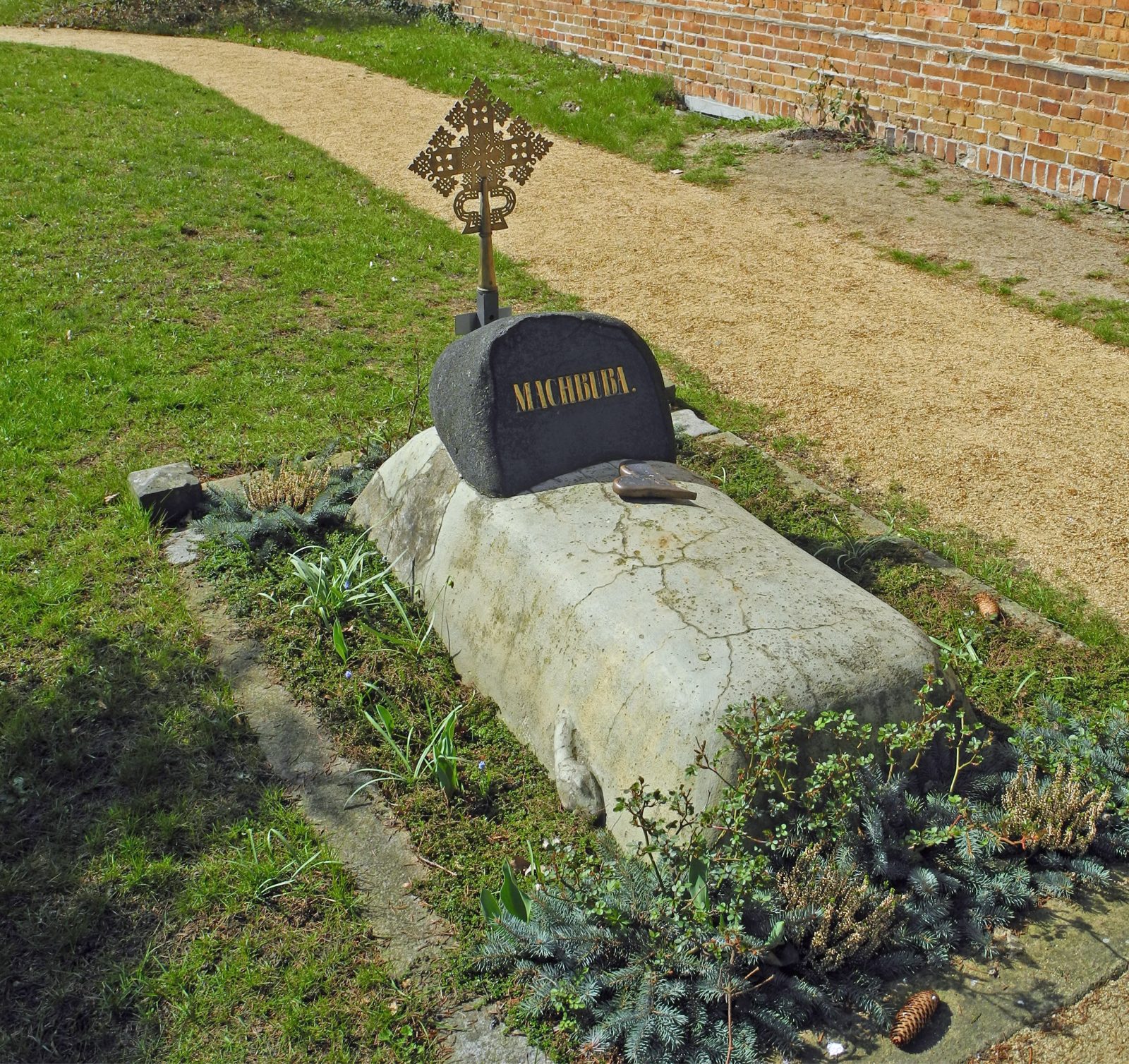
According to the file of the Berlin Police Headquarters dated 8 January 1874, which is kept in the Berlin State Archives, the connecting road between Eisenbahnstraße and Waldemarstraße in today's district of Friedrichshain-Kreuzberg was named after Prince Hermann von Pückler-Muskau at the instigation of Emperor Wilhelm I. [1] The street was created during the division and development of the Köpenicker Feld (1841–1846). [2] The surrounding streets are named after Prussian politicians and military officers, to which Pückler belonged. He fought against Napoleon in the Wars of Liberation from 1813 to 1815 and took part in the victory celebrations in England at the end of the war as a companion of the allies Tsar Alexander I and King Frederick William III of Prussia. It is also possible that the street was named posthumously after Pückler's death as a contemporary tribute by Emperor Wilhelm I, because Pückler maintained a close connection to the Prussian royal family. He was elevated to the rank of prince in 1822 by King Frederick William III of Prussia. In addition, he was already known during his lifetime for his landscape planning and travel writings. The proximity to Lausitzer Platz, which was laid out in 1862, also suggests that the name is related to Pückler's birthplace, Muskau Castle in Upper Lusatia. The town of Bad-Muskau, where the estate and the gardens of the nobleman were located until he moved to Branitz near Cottbus, is also referred to by Muskauerstraße (named in 1871), which lies across Pücklerstraße. The mortal remains of "Machbuba"[3] are buried in Bad Muskau, a young woman from Ethiopia whom Pückler "bought" at a slave market in 1837 during his trip to Egypt. [4]
In addition to references to his landscape gardening and literary activities, aspects of Pückler's supposedly dazzling personality are often presented in media and scientific representations. He is anecdotally and sometimes trivialized as a womanizer[5] and/or adventurous traveler[6]. Even though many texts mention his travels and literary endeavors as well as his dealings with enslaved people, hardly any systematic work has yet been done to determine how he was involved in imperial formations and colonial power relations. [7]
Hermann von Pückler-Muskau was born on 30 October 1785 at Muskau Castle in today's district of Görlitz/Saxony as the first of five children. [8] After changing schools several times and dropping out of his law studies in Leipzig, he decided in 1802 to do military service in Dresden, which he initially evaded in 1804 due to heavy debt, only to fight as a volunteer in 1813, albeit on the side of Prussia, in the "Wars of Liberation" against Napoleon. Before and after his military career, Pückler undertook numerous trips to various European countries, which served as inspiration for the landscape parks designed by Lucie von Hardenberg and his (later divorced) wife (after the marriage was divorced, they continued to live together as a couple). The park in Bad Muskau has been on the UNESCO World Heritage List since 2004.
In 1835, the prince set off on a five-year journey in France, which took him to Algeria, Tunisia, Egypt, Palestine, Lebanon, Syria, Greece and Turkey, among other places. In Egypt in 1837 he met the viceroy and governor Mehmed Ali Pasha and led an expedition to the Nile as his protégé. Pückler's travelogues to the Near East and northern Africa, which appeared under the titles "Semilasso in Africa"[9], "From Mehemed Ali's Empire"[10] and "The Return"[11], were one of the few German-language sources on these regions at the time. The German-language media also widely covered Pückler's forays through the then Ottoman Empire and the young French colonies in northern Africa. From 1834 to 1840, more than 40 newspapers wrote more than 300 reports about Pückler's stays abroad. [12]
The books about his travels were popular with a predominantly middle-class readership – he was one of the most popular German-language authors of the 19th century. Even though his writings were published before the time of the imperialist policy of the German Empire (1871–1918), his subjective descriptions are integrated into "imperial formations"[13] that produce and underpin Europe's superiority thinking over the non-European "others". In Algeria in 1835, Pückler was impressed by the French colonial power that had ruled the country since 1830. [14] He saw Tunisia as suitable for German colonization,[15] which he formulated as an "urgent task"[16] and for which he drew up plans during his Nile expedition. [17]
As Edward Said argued in 1978, European writers contributed to images of an inferior and uncivilized other with their travelogues, novels, or documentaries. [18] This also applies to Pückler's travelogues. Zouheir Soukah, for example, shows that for Pückler, "the Orient" is synonymous with "a failure of civilization"[19] – only colonization based on the French model could set a "modernization" in motion. Bröhan[20] states that while Pückler admired the achievements of Mehmed Ali, whom he regarded as the founding father of modern Egypt, his success was largely attributed to the support of European technical experts. This devaluation goes hand in hand with the fact that Pückler was hardly interested in the social reality and everyday life of the local people, but primarily in the landscape or ancient sites. [21]
His descriptions of the terrain served as a framework to paint the picture of "fantasy-stimulating" and "romantic"[22] landscapes as well as impressive ruined cities ("works of demigods"[23]). When talking about the inhabitants, Pückler, on the other hand, emphasizes the supposedly anachronistic and inferior aspects of the societies there (e.g. in relation to urban infrastructure, agriculture, politics or gender relations). [24] Pückler sums up: "The Orient does not change its customs, by the way, many passages in the Bible clearly show that in Christ's time, as in earlier times, the houses of the Orientals were exactly the same as those of today." [25] At the same time, however, he presents the "Orient" as a place of sensuality that "offers everything that healthy as well as the most perverse taste can only demand". [26]
In contrast to the "classical" and scientific German-language reception of the "Orient", as described by Said[27], Pückler's travelogues are more oriented towards entertainment. [28] In many places, he reproduces the already familiar Orientalist images from the story "One Thousand and One Nights". [29] The common thread that holds the various travel narratives together lies in the portrayal of oneself. It is not only in his writings that Pückler presents himself as a successful world traveller and flâneur. [30] In order to present himself as a "charismatic man of the world" and "wise man of the world"[31], Pückler later integrated orientalist symbolism into the design of the landscape gardens and palaces. For example, he had the graves for himself and Lucie von Hardenberg in the park of Branitz designed in the form of a pyramid, set up a "Turkish Room" in the castle there and appeared in public wearing fez, slippers and silk bloomers. [32]
However, the entanglements in imperial formations are also evident in the matter-of-factness with which he participated in the acquisition of enslaved people – in this context, it should be remembered that England had abolished the slave trade in 1807 and slavery in 1833. In 1837, as part of his Nile expedition, Pückler "bought" several minors at slave markets in Cairo (Egypt) and Carthum (Sudan). [33] In his letters to Lucie von Hardenberg, he writes of four young people who accompanied him on his journey across the Nile, mentioning by name "little N. Hamam", "Machbuba, the eldest girl" and "little Ajamé"[34] He paid most of his attention in his writings and letters to "Machbuba" (Arab. Mahbuba, mistress), an Oromo probably from Ethiopia. [35] According to Assing-Grimelli[36], she was between ten and thirteen years old when she first met Pückler. The death register of the city of Muskau from 1840 states that "Machbuba" was "daughter of an official from a royal court"[37] from the "high mountains of Abyssinia"[38]. According to the same source, she was enslaved in the course of armed conflicts between various Arab rulers and was "bought" by Pückler in Khartoum at the age of eleven. [39] Pückler gives the age of "the Abbyssian Ajamé" as ten years.[40]
The research literature assesses the relationship between Pückler and the female minors differently, with many sources pointing to Pückler's sexual interest in the girls. [41] Volker-Saad, for example, claims that Pückler granted "Machbuba" the status of a "freeman" in his house in accordance with his enlightened Prussian values. [42] This trivializing reading is counteracted by Pückler himself. In a letter to von Hardenberg dated February 2, 1838, he speaks of "my little harem"[43] as an example, whose members behaved like "little dogs"[44], did not cause him any trouble and slept with him in the same room. He goes on to write about the relationship between him and the girls who were formally in his possession: "I am a Turk, but unfortunately an old man who needs mistresses of this kind, who combine the blindest obedience with the attachment of the dogs, because I can no longer pretend that they should be in love with me [sic]." [45] With regard to self-identification as a "Turk", Pückler refers to the relations of power in the Ottoman Empire at the time, which at that time formally administered the province of Egypt. [46] With this self-designation and the turning away from liberal norms of expectation of "Europe", he shows his exoticism. [47]
Pückler's descriptions are also based on a racialized and sexualized regime of gaze that objectifies the bodies of the young girls and exoticizes their personalities. [48] In another letter to Lucie von Hardenberg, for example, he describes "Machbuba" as "the most faithful copy of a Venus of Titian [...] only in a black manner"[49], whose character "civilization had not yet been able to spoil or improve"[50]. From a feminist and anti-racist perspective, the descriptions of "Machbuba" and "Ajamé" as "freemen"[51] and the characterization of the relationship as a father-daughter relationship[52] seem surprisingly relativizing. A relationship based on colonial racist hierarchies, in which a white noble adult man can buy minors on a slave market in the Ottoman Empire, decide on their lives and take them on their journeys as his exoticized companions, cannot be a relationship at eye level. Descriptions that stage Pückler as a "womanizer" or even a "liberator" have a trivializing effect. However, it is difficult to gain access to the personalities of "Machbuba" and "Ajamé" beyond victimizing or heroizing narratives, since only external descriptions of them exist.
In 1840, Pückler returned to Bad Muskau with "Machbuba" and another enslaved boy from South Sudan named "Aman Te-in" (renamed "Joladour"). From there, "Aman Te-in" was sent to Potsdam in the service of Prince Carl of Prussia, a friend of Pückler's. [53] As he indicated in a letter to von Hardenberg, he had "given away" the young "Ajamé" after the Nile journey, as it would not have tolerated the climate in Europe due to its "too delicate condition". [54]
"Machbuba" died after only six weeks in Bad Muskau as a result of tuberculosis. [55] Her mortal remains are buried far away from her place of origin in the Protestant church cemetery in Bad Muskau.
Pücklerstrasse and Muskauerstrasse honour Prince von Pückler-Muskau. In fact, he has been classified as significant for German history over various historical periods (from German imperialism, the Nazi regime to the present). [56] As we have worked out, Pückler's thoughts and actions were integrated into imperial formations. The fact that Pückler also represented liberal and Enlightenment ideas may seem contradictory at first glance. From a postcolonial and feminist perspective, his descriptions and actions appear in the context of the construction of a European, male, aristocratic and superior self that was able to establish itself through a relationship with a sexualized and racialized other. In addition, his image of the "Orient" is embedded in colonial knowledge archives that ultimately legitimize practices of oppression and dehumanization. The life stories of "Machbuba" and "Joladour", which are little present in the collective memory of the Federal Republic of Germany, not only illustrate the long history and presence of Black people in the territory of today's Germany. They also refer to global historical contexts of the mobility of subjects who were subject to slavery and colonialism, to processes of hierarchization, classification and (in)visualization.

Katharina König
Miriam Friz Trzeciak
- LOCATION
- Pücklerstraße
- TODAY
- Pückler-/Muskauerstraße
Citing the article
Katharina König, Miriam Friz Trzeciak: Eine Straße ehrt Hermann von Pückler-Muskau. In: Kolonialismus begegnen. Dezentrale Perspektiven auf die Berliner Stadtgeschichte. URL: https://kolonialismus-begegnen.de/geschichten/eine-strasse-ehrt-hermann-von-pueckler-muskau/ (03.03.2025).
Literature & Sources
[1] There are contradictory information about the naming date of Pücklerstraße. Luise-Berlin / Kauperts (2021) and the Stadtmuseum Berlin state that the street was named on 24.03.1849.
[2] Cf. Kauperts, "Straßenführer durch Berlin", "Pücklerstrasse". Available online at: https://berlin.kauperts.de/Strassen/Puecklerstrasse-14195-Berlin [last access: 07.04.2021].
[3] There are different information and spellings about the age, origin and name of "Machbuba" (mahbuba, Arabic, the beloved). Here we follow the information that Pückler gives in his letters to Lucie von Hardenberg during his trip to Egypt (1837/38). It can be assumed that he subsequently includes experiences with various enslaved girls in his descriptions, so we put the name of the person, who exists only through descriptions by others, in quotation marks.
[4] Cf. Bröhan, Nicole, Fürst Pückler. Eine Biografie, Berlin 2018, pp. 127ff.; Volker-Saad, Kerstin, "Die Abessinierin im Gefolge Fürst Pücklers. Das Rätsel der Machbuba", in: Tagesspiegel, 27.12.2017. Available online at: https://www.tagesspiegel.de/wissen/die-abessinierin-im-gefolge-fuerst-puecklers-das-raetsel-der-machbuba/20793600.html [last access: 09.04.2021].
[5] Cf. Bröhan, Fürst Pückler, pp. 61f.; Klatt, Thomas, "'Geliebter Pascha' – Fürst Pückler und die Frauen", in: moz, 24.09.2013 https://www.moz.de/nachrichten/kultur/_geliebter-pascha_-fuerst-pueckler-und-die-frauen-49714118.html.
[6] Müller, Bettina, "Die Parks des Fürsten Pückler Muskau: Dandy und Gärtner", in: taz, 31.01.2021 https://taz.de/Die-Parks-des-Fuersten-Pueckler-Muskau/!5743983/. Baumert, Bodo, "150th anniversary of Pückler's death Is Prince Pückler suitable as a symbolic figure for Lusatia?", in: LR Online, 31.01.2021 https://www.lr-online.de/lausitz/cottbus/150.-pueckler-todestag-taugt-fuerst-pueckler-als-symbolfigur-fuer-die-lausitz_-54703632.html .
[7] Schwachenwald, Freya, "Art, Nature, Ghosts, and Ice Cream. Transcultural Assemblages of Prince Hermann von Pückler-Muskau (1785–1871) and Machbuba/Ajiamé/Bilillee", in: The journal of transcultural studies 10(2) (2019), pp. 78-120; Richter, Daniela, "Inside the Oriental Spectacle. Hermann von Pückler-Muskau's Egyptian Travelogue", in: Colloquia Germanica 46(3) (2013), p. 237; Fuhrmann, Malte, "Anatolia as a site of German colonial desire and national re-awakenings", in: New Perspectives on Turkey 41 (2009), pp. 117-150.
[8] Cf. Bröhan, Fürst Pückler, p. 9.
[9] Von Pückler-Muskau, Hermann, Semilasso in Afrika, Böelschuby 1836.
[10] Von Pückler-Muskau, Hermann, Aus Mehemed Ali's Reich, Berlin 2018 [1844].
[11] Von Pückler-Muskau, Hermann, Die Rückkehr, Böelschuby 1848.
[12] Cf. Volker-Saad, Die Abesssinierin im Gefolge Fürst Pücklers, n.d.
[13] Cf. Stoler, Ann Laura / McGranahan, Carole, "Refiguring Imperial Terrains", in: Stoler, Ann Laura / McGranahan, Carole / Perdue, Peter C., Imperial Formations, Santa Fe 2007; Schwachenwald, Art, Nature, Ghosts, and Ice Cream, p. 84.
[14] Jelaffke, Cordula, Fürst Pückler, Berlin 1993, p. 137.
[15] Cf. Bröhan, Fürst Pückler, p. 108; Jelaffke, Cordula, Fürst Pückler, Berlin 1993, p. 137.
[16] Soukah, Zouheir, The "Orient" as Cultural Self-Invention of the Germans. Dissertation thesis, 2016. Available online at: https://docserv.uni-duesseldorf.de/servlets/DerivateServlet/Derivate-43645/zouheir_soukah_dissertation.pdf [last access: 06.04.2021].
[17] Cf. Soukah, Der "Orient" als kulturelle Selbsterfindung der Deutschen, p. 66.
[18] Said, Edward, Orientalism, New York 1978.
[19] Cf. Soukah, Der "Orient" als kulturelle Selbsterfindung der Deutschen, p. 87.
[20] Cf. Bröhan, Fürst Pückler, p. 131.
[21] Cf. Soukah, Der "Orient" als kulturelle Selbsterfindung der Deutschen, pp. 67ff.
[22] Von Pückler-Muskau, Hermann / Wiemken, Helmut (eds.), Fürst Pücklers orientalische Reisen. Aus den abenteuerlichen Berichte der weltkundigen Fürsten Hermann von Pückler-Muskau, Hamburg 1963, p. 68.
[23] Cf. Pückler, Fürst Pücklers orientalische Reisen.
[24] Cf. Soukah, Der "Orient" als kulturelle Selbsterfindung der Deutschen, pp. 79-85.
[25] Cf. Pückler, Fürst Pücklers orientalische Reisen, p. 11.
[26] Cf. Soukah, Der "Orient" als kulturelle Selbsterfindung der Deutschen, p. 76.
[27] Cf. Said, Orientalism, p. 27.
[28] Cf. Richter, Inside the Oriental Spectacle, p. 174.
[29] Cf. Pückler, Fürst Pücklers orientalische Reisen, p. 200; see also Richter, Inside the Oriental Spectacle, p. 174; Soukah, Der "Orient" als kulturelle SelbsterErfindung der Deutschen, p. 76; Schwachenwald, Art, Nature, Ghosts, and Ice Cream, p. 96.
[30] Cf. Richter, Inside the Oriental Spectacle, p. 176.
[31] Polaschegg, Andrea, "Pücklers Orient", in: Jacob, Ulf / Neuhäuser, Simone / Streidt, Gert, Fürst Pückler. Ein Leben in Bildern, Berlin-Brandenburg 2020, pp. 180-237, here p. 188.
[32] Cf. Polaschegg, Pücklers Orient, p. 188.
[33] There are contradictory information about the locations of the slave markets. In contrast to Volker-Saad (Die Abyssinierin im Gefolge Fürst Pückler, n.d.), Bröhan (Fürst Pückler. Eine Biografie, pp. 127ff.) and Jelaffke (Fürst Pückler, pp. 154f.; 175) write that Pückler "acquires" the enslaved people exclusively in Cairo. The Ottoman Empire was involved in the trade with enslaved people in the Mediterranean region. In Egypt, the trade with so-called Mamelukes, military slaves of Central Asian or Eastern European origin, was particularly widespread. In the military hierarchy, they often held high military positions. Referring to this, Pückler also had "Machbuba" wear the clothes of a Mameluke (cf. Schmitt, Machbuba, p. 32). The practices of enslavement in various regions of the Ottoman Empire were abolished in the course of colonization by European states in the 19th century.
[34] Assing-Grimelli, Ludmilla. Fürst Hermann von Pückler-Muskau (2004): Eine Biographie. [2nd vol.: vol. 1: Hamburg 1873. Hoffmann und Campe.; vol. 2: Berlin 1874. Wedekind & Schwieger]. Hildesheim: Georg Olms Verlag. p. 120.
[35] Schmitt, Kathrin, "Machbuba – an Oromo Slave-Girl who won the heart of a German Prince", in: The Oromo Comentary 4(2) (1994), pp. 32–34, here p. 33.
[36] Cf. Assing-Grimelli, Fürst Hermann von Pückler-Muskau, p. 111.
[37] Cf. Volker-Saad, Die Abessinierin im Gefolge Fürst Pücklers, n.d.
[38] Ibid.
[39] Cf. ibid.
[40] Cf. Assing-Grimelli, Fürst Hermann von Pückler-Muskau, p. 36.
[41] Cf. Bröhan, Fürst Pückler, p. 147; Beder, René / Kohlschmidt, Arielle, Ich, Machbuba. Die Geliebte Pücklers erzählt, Cottbus 2006; Kleßmann, Eckart, Fürst Pückler und Machbuba, Berlin 1998; Probst, Ernst, Machbuba. Die Sklavin und der Fürst, Munich 2010.
[42] Cf. Volker-Saad, Die Abessinierin im Gefolge Fürst Pücklers, n.d.
[43] Cf. Assing-Grimelli, Fürst Hermann von Pückler-Muskau, p. 118.
[44] Cf. ibid.
[45] Cf. ibid., pp. 118f.
[46] Overall, Pückler distances himself critically from the Ottoman Empire, which he cites as examples of forms of "oriental" tyranny (Pückler, Fürst Pücklers orientalische Reisen, p. 273; see also Soukah, Der "Orient" als kulturelle SelbsterErfindung der Deutschen, p. 85). As Soukah (ibid., p. 81) notes, Pückler uses the terms "Turk" and "Arab" as synonymous and undifferentiated as far as possible in his description of the "Orientals".
[47] Cf. Assing-Grimelli, Fürst Hermann von Pückler-Muskau, pp. 118f.
[48] Cf. Richter, Inside the Oriental Spectacle, p. 182.
[49] Cf. Assing-Grimelli, Fürst Hermann von Pückler-Muskau, p. 122.
[50] Ibid.
[51] Cf. Volker-Saad, Die Abessinierin im Gefolge Fürst Pücklers, n.d.
[52] Cf. Assing-Grimelli, Fürst Hermann von Pückler-Muskau, p. 122.
[53] Cf. text "Machbuba", in: Exhibition "Fürst Pückler. Ein Europäischer in Branitz", Cottbus 2021 (Stiftung Fürst – Pückler – Museum Schloss und Park Branitz).
[54] Cf. Assing-Grimelli, Fürst Hermann von Pückler-Muskau, p. 121.
[55] Cf. Volker-Saad, Die Abessinierin im Gefolge Fürst Pücklers, n.d.
[56] Cf. Schwachenwald, Art, Nature, Ghosts, and Ice Cream, p. 84.
Tags
#Ajiamé #Alexander von Humboldt #Bad Muskau #Bettina von Arnim #Bilillee #Branitz #Exotismus #Franz Liszt #Garde du Corps #Heinrich Heine #Hierarchie #Imperialismus #Johann Wolfgang von Goethe #Kairo #Karl Friedrich Schinkel #Khartum #koloniale Stereotyen #koloniales Wissen #Landschaftsgestaltung #Lucie von Hardenberg #Machbuba #Mädchen #Militär #Muskauerstraße #Nilexpedition #Nordafrika #Orientalismus #Oromo #Osmanisches Reich #Pücklerstraße #Reiseberichte #Reisen #Schriftsteller #Sklaverei #Straßenname #Unterhaltungsliteratur #Verstrickungen